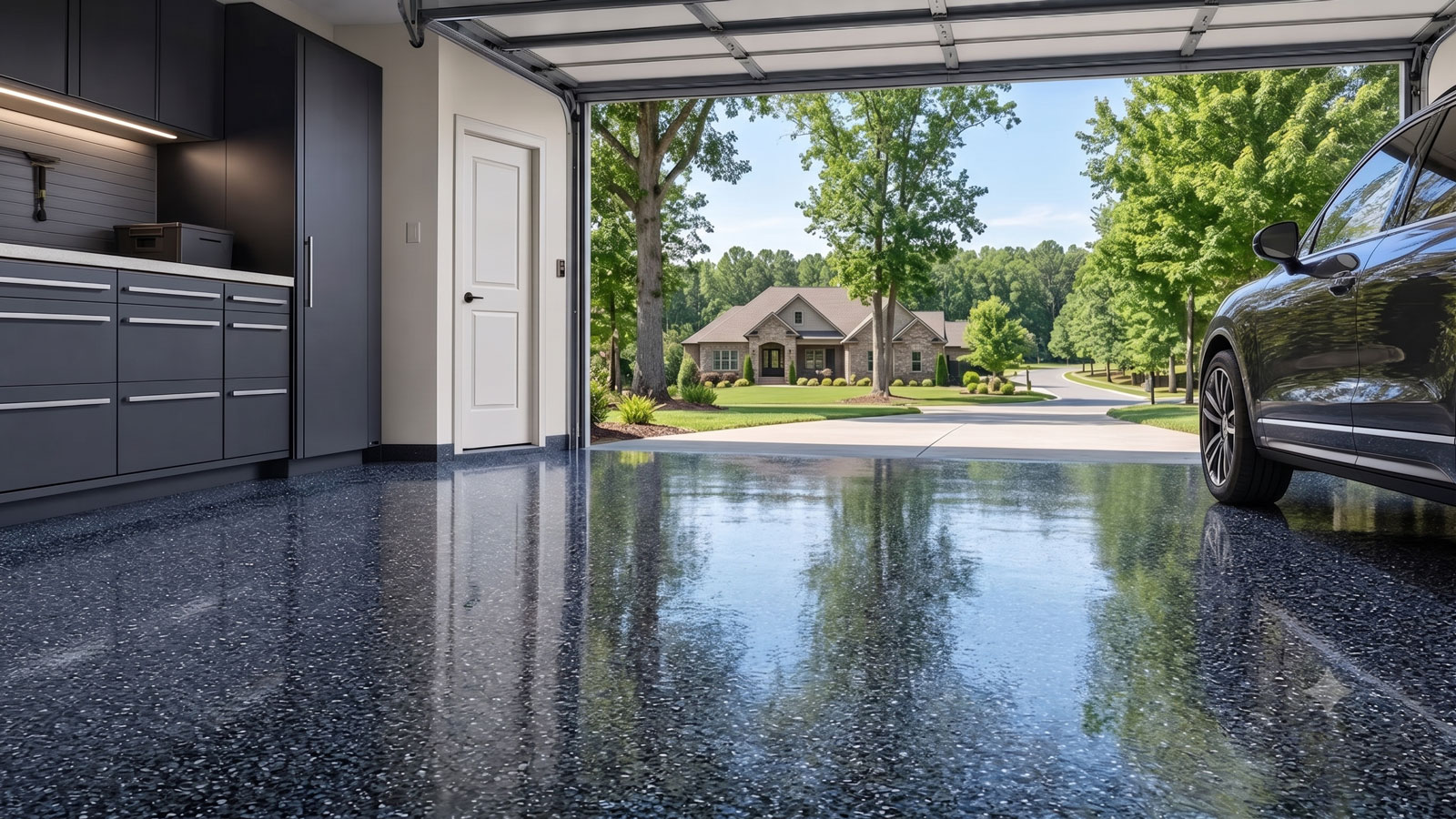
Garage Floor Coating in Surfside Beach, SC
Floor Coating Services in Surfside Beach, SC
Surfside Beach is compact enough that small differences in elevation and distance from the ocean can matter from one property to the next. About 310 acres of the town are mapped in higher-risk AE and VE flood zones, while other areas sit in lower-risk X zones. That makes driveway drainage and garage-threshold behavior more useful project clues than a simple 'coastal' label.
The town has also earned a Class 7 rating in FEMA's Community Rating System through floodplain management, stormwater work, and public outreach. For a garage-floor project, that local focus on water reinforces a practical rule: a coating should protect the concrete, but it should not be expected to correct a low garage entrance or repeated stormwater entry.
Surfside Beach garages may also deal with sand, damp beach gear, strong sun, and salt exposure, especially closer to the ocean. A few blocks inland, the use can be much more conventional. The installer should match preparation, texture, and topcoat to the individual garage rather than overbuilding every project for the most extreme coastal condition.
Local Market Insight
Surfside Beach packs meaningful flood-zone variation into a small coastal town. The most important local coating checks are threshold elevation, driveway drainage, true sand/salt exposure, direct sun, and the condition of the slab beneath any older paint or coating.
What Affects the Cost of Garage Floor Coating in Surfside Beach?
Garage floor coating in Surfside Beach typically runs $6–$12 per square foot, with a typical two-car garage around $3,000–$5,500. Drainage-related preparation at the entrance, old coating removal, cracks and patches, sand and contamination, sun exposure, and finish texture can all affect the final scope.
Threshold and driveway drainage
In a low coastal town, a small difference in driveway grade can determine whether stormwater moves away from the garage or repeatedly wets the door line. The coating estimate should identify that condition rather than hide it.
Existing paint, sealer, or coating
Older beach-town garages may have several generations of floor treatment. Weak or incompatible material needs to be removed so the new system bonds to sound, prepared concrete.
Sand and salt exposure
Properties near the ocean can bring more sand and salt-laden moisture into the garage. That affects cleaning and finish selection, but the actual exposure should be confirmed rather than assumed.
Crack, patch, and edge repair
Chipped thresholds, patched areas, control joints, and localized cracking all require their own treatment before the decorative coating is applied.
Sunlight at the garage opening
Strong direct sun can reach the first several feet of a coastal garage. Topcoat choices should account for the door orientation and actual sunlight on the floor.
Traction versus cleanability
A wetter or sandier garage may benefit from more texture, but excessive grit can make routine sweeping and washing harder. Texture should fit the household's real use.
Call for a clear, project-specific estimate — or request one online.
Local Garage-Floor Conditions in Surfside Beach
Surfside Beach's flood maps show that the town is not one uniform risk zone. That same property-by-property mindset is useful for floor coatings: two nearby garages can have different driveway grades, threshold heights, and histories of water entry.
A dry garage in a mapped coastal area may be a straightforward coating project, while a garage in a lower-risk area can still have runoff problems caused by its own lot grading. The observed path of water during storms matters more than a broad map label for coating preparation.
Salt and sand follow the same rule. They are highly relevant for some ocean-near homes and far less important for others. The finish should be durable and easy to clean without turning every Surfside Beach floor into an unnecessarily aggressive traction surface.
Flood-Zone Variation Makes the Garage Threshold Worth Inspecting
Surfside Beach's comprehensive plan identifies about 310 acres in AE and VE flood zones, with other parts of town mapped in lower-risk X areas. That variation exists within a geographically small community.
For a garage coating, the map is background rather than a diagnosis. The practical evidence is at the house: water marks on the door seal, sediment at the threshold, a driveway that pitches inward, or a low spot that stays wet after rain.
If those signs are absent, the coating can be planned around the slab itself. If they are present, the drainage issue should be understood before the floor is finished.
Coastal Traction Should Still Be Easy to Live With
A garage near the beach may receive wet sandals, sandy feet, bicycles, coolers, and vehicles after summer storms. Those conditions can justify a little more traction than a perfectly dry storage-only garage.
More texture is not automatically better. Fine sand can lodge in an overly aggressive surface, and a floor that is hard to sweep is a poor trade for traction that the household does not actually need.
The useful target is enough grip for the wettest normal use while keeping routine sweeping and washing simple.
Questions to Answer Before Coating a Surfside Beach Garage
- Does the driveway pitch toward or away from the garage door?
- Has water ever crossed the threshold during heavy rain or high water?
- Is the floor bare, painted, sealed, patched, or previously coated?
- How often does beach sand or damp gear actually enter the garage?
- How much direct sun reaches the floor with the door open?
- What level of traction will still be comfortable to sweep and wash?
Surfside Beach Garage Floor Coating FAQs
Does being in Surfside Beach mean every garage has flood problems?
No. The town contains different flood-zone conditions, and individual lot grading varies. Look at the actual garage threshold, driveway, and history of water entry rather than assuming a problem from the address alone.
Can coating waterproof a low garage door opening?
No. Coating protects the concrete surface but does not change the elevation of the threshold or redirect stormwater. Repeated water entry should be addressed separately.
Should a Surfside Beach floor have heavy anti-slip texture?
Only if the household's use calls for it. A moderate texture may be useful with wet tires and beach gear, while excessive texture can make sand and dirt harder to remove.
Is salt air a reason to skip epoxy or polyaspartic coatings?
No. The system should be chosen and prepared for the actual garage environment. Salt exposure matters most where it is real and frequent, not simply because the property is in a coastal town.
Surfside Beach Neighborhoods & Local Context
Phone Quote Line
Speak with a floor coating specialist about your project and get a realistic estimate range.
(843) 966-9906Typical Project Cost
$3,000–$5,500
Typical range for a two-car garage. Final pricing depends on floor size, concrete condition, prep work, coating type, and finish options.
Helpful Guides