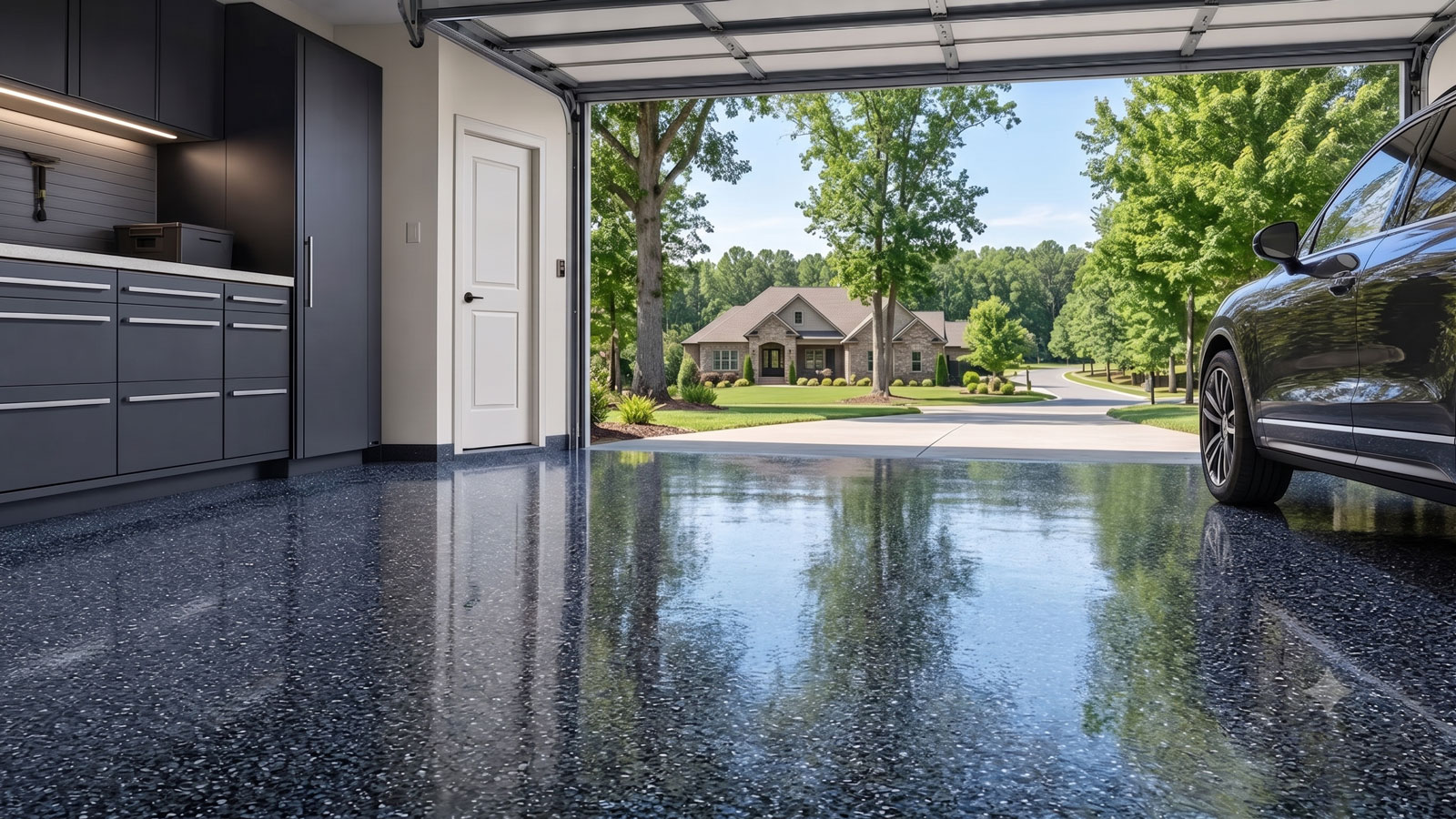
Garage Floor Coating in Carolina Forest, SC
Floor Coating Services in Carolina Forest, SC
Carolina Forest is one of the clearest growth-area garage markets in the Grand Strand. The community had 23,342 residents in 2020, and as of 2017 nearly 14,000 residential units in the area had been approved but not yet built. That development history means many garages are newer than the housing stock in the older coastal towns, but they are not all the same age or built under the same conditions.
The community is also shaped by ponds, wetlands, drainage corridors, and heavily used road connections between US 501, Carolina Forest Boulevard, River Oaks Drive, and newer collector streets. Horry County completed the Carolina Forest Boulevard widening to four lanes with turn lanes and a multi-use path, underscoring how much residential growth and daily traffic the area now carries.
For garage-floor coating, newer concrete does not eliminate the need for preparation. Construction residue, curing compounds, sealers, smooth finishes, hairline cracking, and drainage at the driveway can all matter. The project should be based on the particular subdivision, slab, and garage use rather than a broad assumption that newer means ready to coat.
Local Market Insight
Carolina Forest is a fast-growing planned residential area with a large supply of relatively newer homes, extensive road investment, and a landscape organized around ponds and drainage corridors. The local coating question is often less about decades of old paint and more about how newer concrete was finished, sealed, used, and exposed to water since construction.
What Affects the Cost of Garage Floor Coating in Carolina Forest?
Garage floor coating in Carolina Forest typically runs $6–$12 per square foot, with a typical two-car garage around $3,000–$5,500. Newer slabs can still require grinding, crack repair, curing-compound or sealer removal, edge work, and careful planning around garage size, storage, drainage, and finish choices.
Curing compounds and builder-applied sealers
Newer-looking concrete may still have surface treatments that interfere with adhesion. Proper mechanical preparation is important even when the floor has never been painted or coated.
Construction residue and early-use staining
Drywall mud, paint overspray, adhesive, tire marks, oil, and storage stains can accumulate quickly in a busy garage. These need to be addressed before coating.
Hairline cracks and control joints
Newer slabs can develop shrinkage cracks just like older ones. The estimate should distinguish repairable cracks from designed joints that may need to remain functional.
Pond-and-drainage setting
Many neighborhoods are built around stormwater ponds and low coastal terrain. The relevant garage question is whether the driveway and landscaping keep runoff moving away from the door during heavy rain.
Larger attached garages and storage zones
Growing suburban neighborhoods can include two-car and three-car garages with utility areas, steps, cabinets, and storage. Those details add square footage, perimeter, and staging work.
Traffic and return-to-use planning
Carolina Forest is a heavily traveled residential area. If the garage is the household's primary parking and storage space, cure time and vehicle-return timing should be planned before work starts.
Call for a clear, project-specific estimate — or request one online.
Local Garage-Floor Conditions in Carolina Forest
Carolina Forest's median household income is above $74,000 and the community has a large family-age population as well as retirees. Garages can therefore serve as parking, storage, workshop, exercise, and recreation space rather than as empty vehicle bays.
The area's rapid development means concrete age can vary substantially from one subdivision to another. A garage built a few years ago may have no coating history at all, while an earlier phase may already have paint, sealers, repairs, or a failed DIY system.
Low, flat terrain and neighborhood drainage features make the driveway-to-garage transition worth checking after hard rain. A sound coating system belongs on prepared concrete, but persistent runoff or ponding at the door should be understood separately.
Carolina Forest Is a Newer-Garage Market, Not a No-Prep Market
Carolina Forest has been one of Horry County's biggest residential growth areas; nearly 14,000 units had been approved but not yet built as of 2017. The community's 2020 population reached 23,342, and residential construction has continued to reshape the area.
That development pattern increases the odds of encountering relatively newer concrete, but fresh-looking concrete can still contain curing products, builder sealers, smooth finishing, patch material, or construction residue that must be removed or profiled before coating.
The homeowner should expect the installer to test and prepare the surface rather than simply wash a newer slab and cover it.
Growth Corridors Change Access and Garage Use
Carolina Forest Boulevard was widened to four lanes with turn lanes and improved connections to River Oaks Drive, while Postal Way and other collector improvements have expanded access through the community.
That infrastructure reflects the area's scale as a year-round residential district rather than a small beach enclave. Many households rely heavily on the garage for daily parking, storage, bicycles, lawn equipment, and family overflow.
Planning the project around that real use — including where vehicles and stored items will go during grinding and cure — can be just as important as choosing the flake blend.
Questions to Answer Before Coating a Carolina Forest Garage
- Has the slab ever been sealed, painted, or treated with a curing compound?
- Are there hairline cracks, control joints, or builder patches that need separate treatment?
- Does rainwater move away from the garage or collect near the driveway apron?
- How many bays, steps, storage areas, and fixed cabinets are included in the project?
- What construction residue, oil, tire marks, or other contamination is present?
- Where will vehicles and household storage go while the floor is prepared and cured?
Carolina Forest Garage Floor Coating FAQs
Do newer Carolina Forest garages still need diamond grinding?
A newer slab still needs the surface profile required by the coating system. Curing compounds, sealers, smooth finishing, and contamination can all interfere with adhesion even when the concrete looks clean.
Are cracks in a newer Carolina Forest slab unusual?
No. Concrete can develop shrinkage cracks as it cures and moves. What matters is the type and condition of the crack and whether the surrounding slab is sound.
Do stormwater ponds mean the garage slab has moisture trouble?
Not necessarily. Neighborhood drainage features are part of the larger site system. The individual garage should be judged by its own drainage, slab condition, and any actual moisture-related signs.
Why plan vehicle timing before the coating project?
Many Carolina Forest households depend on attached garages for daily parking and storage. Knowing when vehicles can return helps the homeowner choose a schedule and system without creating avoidable disruption.
Carolina Forest Neighborhoods & Local Context
Phone Quote Line
Speak with a floor coating specialist about your project and get a realistic estimate range.
(843) 966-9906Typical Project Cost
$3,000–$5,500
Typical range for a two-car garage. Final pricing depends on floor size, concrete condition, prep work, coating type, and finish options.
Helpful Guides