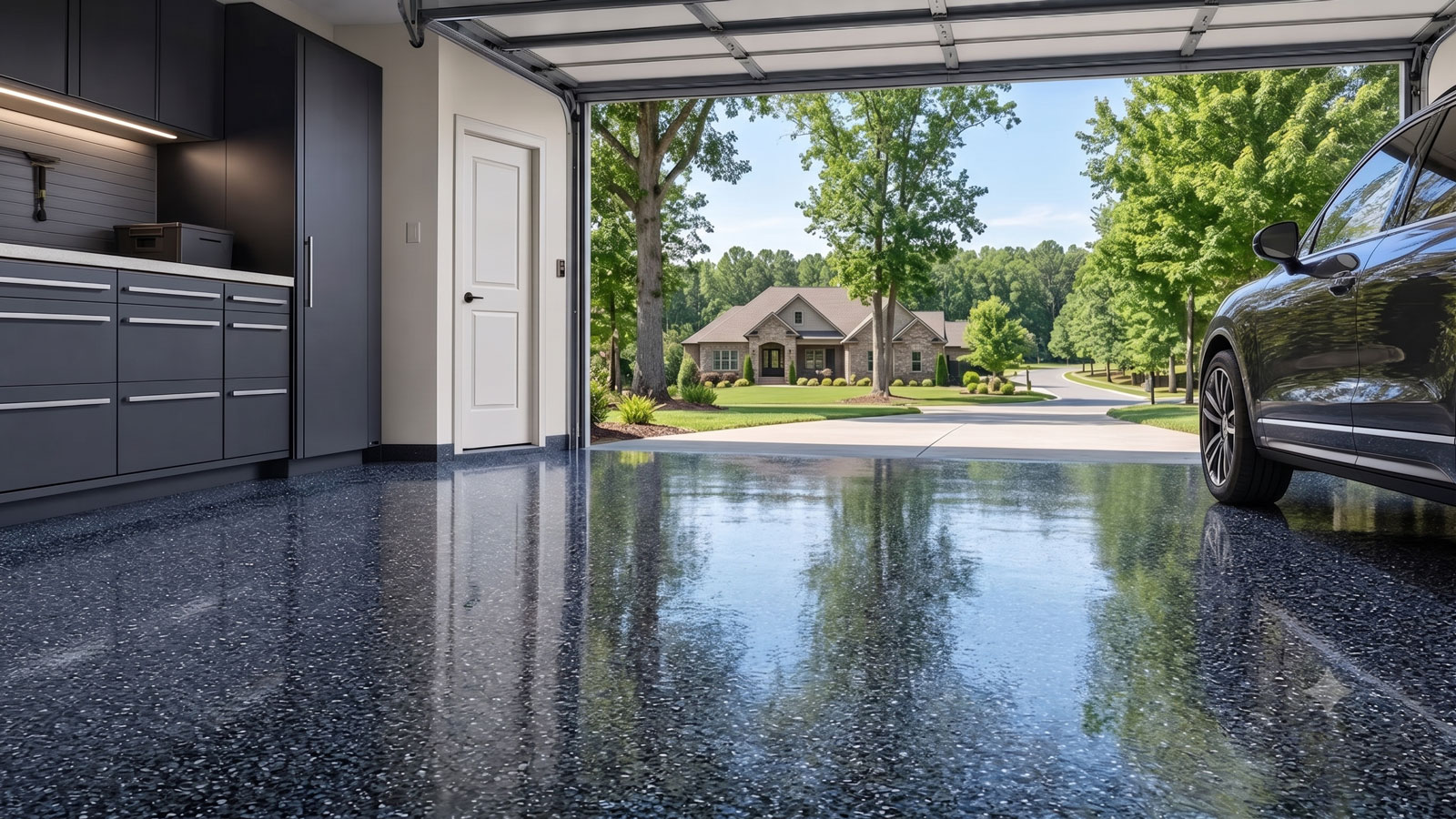
Garage Floor Coating in Conway, SC
Floor Coating Services in Conway, SC
Conway is the inland anchor of the Grand Strand, and its garage-floor conditions are different from the beach communities to the east. The city sits around the Waccamaw River and Lake Busbee, with older in-town neighborhoods, established subdivisions, and fast-growing residential edges all contributing different slab histories and drainage patterns.
The growth is measurable. Conway's estimated population reached about 30,600 in 2025, more than 22 percent above its 2020 estimate base. That means a coating contractor can encounter everything from long-used garage slabs near the older city core to relatively new concrete in expanding subdivisions around the perimeter.
For homeowners, age alone is not the right shortcut. A newer slab may still carry curing compounds, sealers, or early cracks, while an older slab can be an excellent coating surface after paint, oil, patches, and weak material are properly removed. The best estimate starts with the floor itself and the way water moves around the property.
Local Market Insight
Conway's rapid growth creates a genuine mix of older town garages and newer subdivision slabs. Its inland river setting shifts the local emphasis away from beach sand and toward slab history, drainage, stormwater, and the differences between established neighborhoods and fast-growing residential edges.
What Affects the Cost of Garage Floor Coating in Conway?
Garage floor coating in Conway typically runs $6–$12 per square foot, with a typical two-car garage around $3,000–$5,500. Preparation can vary widely between older in-town floors and newer subdivision concrete, so previous coatings, curing products, cracks, drainage, garage size, and finish choices all affect the final scope.
Older paint and long-use slab history
Established Conway garages may contain old paint, oil staining, patch compounds, anchor holes, or previous DIY coatings. Removing weak material can be a larger part of the project than the decorative finish itself.
Newer concrete and surface treatments
A recently built garage is not automatically ready for coating. Curing compounds, sealers, smooth machine finishing, or construction residue may still need to be removed through proper mechanical preparation.
Crack and joint repair
Older and newer slabs can both crack. The estimate should distinguish stable shrinkage or settlement cracks from joints that need to remain functional and from damaged areas that require repair.
Drainage around the garage
Conway's river-and-lowland setting makes property drainage worth checking, especially after heavy rain. Driveway pitch, swales, yard grading, and threshold height can affect how much water reaches the garage entrance.
Garage size in expanding subdivisions
Newer homes can include larger two-car and three-car layouts, storage recesses, steps, and more perimeter detail. Square footage and edge work should be measured rather than assumed from a standard garage label.
Staging and return-to-use timing
Family vehicles, lawn equipment, freezers, tools, and storage all need a temporary home while the floor is prepared and cured. Fast return-to-service can influence system and scheduling choices.
Call for a clear, project-specific estimate — or request one online.
Local Garage-Floor Conditions in Conway
Conway's 65-percent-plus homeownership rate and rapid recent population growth mean the garage-floor market spans both established owners and households in newer subdivisions. Those two settings can need very different preparation even when the finished coating looks the same.
River proximity does not mean every Conway home is flood-prone, but the Waccamaw system and the city's mapped drainage network make water movement a legitimate site question. A garage on higher, well-drained ground may be straightforward; a low approach or recurring threshold wetting deserves closer attention.
The inland location also means salt and beach sand are usually secondary compared with the coast. Lawn debris, soil, wet tires, workshop use, old paint, and the condition of the slab tend to be more useful project variables.
Conway's Growth Creates Two Very Different Garage Starting Points
Conway grew from about 25,000 residents at the 2020 estimate base to roughly 30,600 in the 2025 estimate. Residential growth around the city's perimeter has added a meaningful supply of newer garages alongside the established housing closer to town.
A newer garage may have clean-looking concrete but still require removal of curing compounds, sealer, drywall mud, paint overspray, or other construction residue. An older garage may need more crack repair, coating removal, oil treatment, or patch work.
Neither slab should be judged by age alone. The useful distinction is what is actually on the surface, what the concrete is doing, and what preparation is required before the coating goes down.
Waccamaw-Area Drainage Belongs in the Pre-Coating Walkthrough
Conway's mapping includes the Waccamaw River, Lake Busbee, flood zones, outfalls, stormwater pipes, open channels, and drainage ponds. That network is a reminder that water management is part of how the city works.
For a garage project, the homeowner does not need to become a drainage engineer. The practical checks are simple: Does water collect at the apron? Does a downspout empty toward the driveway? Does the garage stay damp after a storm? Is there a visible path for runoff away from the door?
Those observations help separate a surface-coating project from a site-water problem and keep the floor system focused on what it can actually solve.
Questions to Answer Before Coating a Conway Garage
- Is the garage in an older in-town home or a newer subdivision, and what has happened to the slab since construction?
- Is there old paint, sealer, a curing product, or a previous coating on the concrete?
- Do cracks, joints, or patches appear stable and sound?
- Does rainwater collect near the garage apron or threshold?
- How many bays, steps, storage alcoves, or wall edges are included in the coating scope?
- How quickly must vehicles, lawn equipment, and stored items return to the garage?
Conway Garage Floor Coating FAQs
Is a newer Conway garage easier to coat than an older one?
Not always. New concrete may still have curing compounds, sealers, smooth finishes, or construction residue. Older concrete may need more repairs or coating removal. The preparation should follow the actual floor condition.
Does being near the Waccamaw River mean my garage has a moisture problem?
No. River geography does not determine the condition of an individual slab. Look instead for actual signs such as recurring wetting, damp edges, drainage toward the door, or moisture-related deposits on the concrete.
Should joints in a Conway garage be filled before coating?
Some cracks and defects can be repaired, but functioning control or expansion joints may need to remain able to move. The installer should identify the joint type before deciding how to treat it.
Can an older Conway slab still take a premium coating system?
Yes. Mature concrete can be an excellent coating surface when it is sound and properly prepared. Old paint, oil, loose patches, and contamination need to be addressed first.
Conway Neighborhoods & Local Context
Phone Quote Line
Speak with a floor coating specialist about your project and get a realistic estimate range.
(843) 966-9906Typical Project Cost
$3,000–$5,500
Typical range for a two-car garage. Final pricing depends on floor size, concrete condition, prep work, coating type, and finish options.
Helpful Guides